




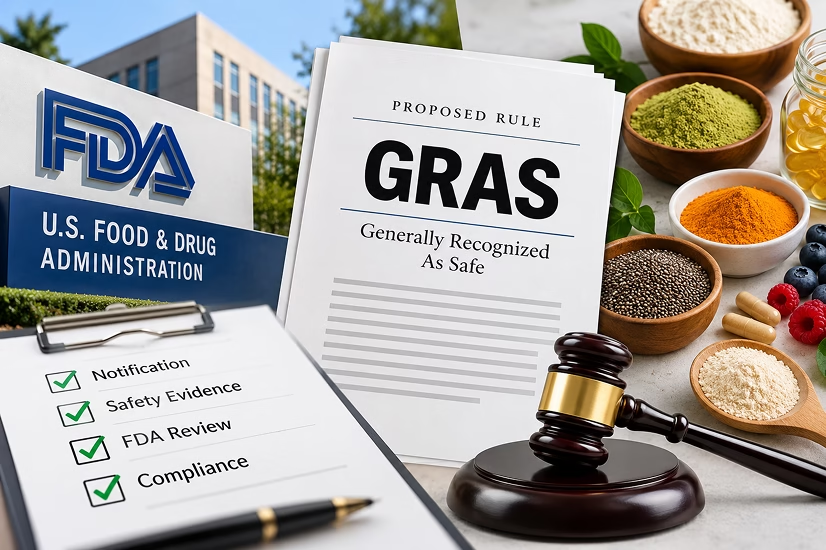
FDA’s Mandatory GRAS Proposal
The U.S. Food and Drug Administration (FDA) has proposed a significant change to the way Generally Recognized as Safe (GRAS) substances are handled in the United States.
The proposed rule would establish a mandatory notification system for certain GRAS uses, replacing the current voluntary GRAS notification framework. If finalized, the proposal could affect food manufacturers, ingredient suppliers, importers, and companies that rely on GRAS determinations to market substances for use in food.
For companies with existing or planned GRAS determinations, understanding the proposed changes now can help identify potential documentation, regulatory, and compliance considerations.
What Is GRAS?
GRAS stands for Generally Recognized as Safe.
Under the Federal Food, Drug, and Cosmetic Act, substances intentionally added to food generally require FDA approval as food additives unless an applicable exemption applies.
One important exemption applies to substances that are generally recognized, among qualified experts, as having been adequately demonstrated to be safe under the conditions of their intended use.
A substance can achieve GRAS status through:
- Scientific procedures
- Experience based on common use in food before January 1, 1958
Companies may currently make a GRAS determination without submitting a notification to FDA. FDA also operates a voluntary GRAS notification program through which companies can submit their GRAS conclusions for agency review.
The proposed rule would significantly change this voluntary framework.
What Is FDA Proposing?
FDA is proposing to make GRAS notification mandatory for applicable uses of substances claimed to be GRAS.
Under the proposed framework, companies would generally be required to notify FDA when they introduce a substance into interstate commerce under the GRAS provision.
This would give FDA greater visibility into substances being used in food and the scientific basis supporting their GRAS status.
The proposal is intended to improve transparency and strengthen FDA’s ability to identify substances that may require additional regulatory oversight.
How Would Mandatory GRAS Notification Change Compliance?
The proposed rule could change how companies approach GRAS determinations.
Under the current voluntary system, a company may determine that a substance is GRAS and choose not to submit a GRAS notice to FDA.
Under the proposed mandatory framework, companies relying on the GRAS provision would generally need to submit the applicable notification to FDA.
This means companies may need to establish more formal processes for:
- Identifying substances that rely on GRAS status
- Preparing GRAS documentation
- Reviewing scientific evidence
- Confirming intended conditions of use
- Preparing and submitting FDA notifications
- Maintaining supporting records
- Monitoring changes to ingredients and formulations
For businesses with large ingredient portfolios, this could require a more structured GRAS compliance program.
Existing GRAS Conclusions May Need Review
The proposed rule could also be important for companies that already have GRAS conclusions.
Businesses should not assume that an existing self-GRAS determination will automatically remain unaffected.
Companies may want to review:
- Existing GRAS conclusions
- Scientific literature and safety data
- Expert panel documentation
- Exposure assessments
- Intended conditions of use
- Manufacturing specifications
- Historical regulatory evaluations
- Existing FDA GRAS notices
This type of review can help identify gaps between existing documentation and the requirements contemplated by the proposed rule.
Proposed Streamlined Pathway for Certain Existing Uses
FDA’s proposal also addresses substances that are already being used in interstate commerce based on GRAS conclusions.
The proposed framework includes a time-limited streamlined pathway for certain existing GRAS uses.
This is particularly relevant for companies that have relied on self-determined GRAS status rather than submitting a voluntary FDA GRAS notice.
Companies should evaluate whether their existing GRAS determinations could qualify for the proposed streamlined process and what information would need to be provided.
Greater Transparency for GRAS Substances
Another important feature of the proposal is increased transparency.
A mandatory notification system would give FDA more information about substances being used under the GRAS provision.
FDA also proposes changes involving the public availability of GRAS information and its GRAS notice inventory.
Greater transparency could make it easier for FDA and other stakeholders to understand:
- Which substances are being used as GRAS
- The intended conditions of use
- The basis for the GRAS conclusion
- The information submitted to FDA
- FDA’s response to the notification
For companies, this may also increase the importance of ensuring that GRAS documentation is accurate, consistent, and scientifically defensible.
What Companies Should Review Now
Although the proposal is not yet a final rule, companies can begin evaluating their current GRAS programs.
A practical GRAS readiness review should consider the following.
1. Ingredient Inventory
Identify all substances used in products that rely on a GRAS determination.
2. Conditions of Use
Confirm that actual use levels, food categories, serving sizes, and intended populations match the conditions covered by the existing GRAS conclusion.
3. Scientific Evidence
Review the scientific evidence supporting safety, including toxicology data, published literature, exposure information, and other relevant safety assessments.
4. Qualified Expert Basis
Evaluate whether the documentation adequately supports the conclusion that qualified experts would recognize the substance as safe under the intended conditions of use.
5. Documentation
Confirm that the company maintains appropriate records supporting the GRAS conclusion and can explain how the conclusion was reached.
6. FDA Notification History
Determine whether a GRAS notice has previously been submitted to FDA and review any correspondence or agency response associated with that notice.
How Could the Proposal Affect New Product Development?
The proposed mandatory framework could also influence how companies develop new food ingredients and products.
Companies may need to consider GRAS status earlier in the product development process rather than treating regulatory review as a final step before commercialization.
A regulatory assessment could include:
Ingredient identification → Safety assessment → GRAS determination → Conditions of use → Documentation → FDA notification, where applicable
Integrating these steps into product development can help companies identify potential regulatory issues before manufacturing and commercialization.
What About Imports and International Ingredient Suppliers?
The proposed changes may also be relevant to companies that source ingredients internationally.
U.S. importers and food manufacturers should understand the regulatory status of ingredients entering the U.S. market and determine whether their suppliers have adequate documentation supporting GRAS status.
Supplier documentation should be reviewed carefully rather than relying solely on a statement that an ingredient is “GRAS.”
Companies should consider whether the documentation supports the specific:
- Ingredient identity
- Manufacturing process
- Intended use
- Use level
- Food category
- Population
- Exposure level
A GRAS conclusion must be evaluated in the context of its specific intended conditions of use.
The Proposed Rule Is Not Yet Final
One important distinction is that FDA’s mandatory GRAS proposal is currently a proposed rule, not a final regulation.
Companies should therefore avoid treating the proposed requirements as though they are already legally effective.
At the same time, businesses that rely heavily on GRAS determinations may benefit from reviewing their programs before a final rule is issued.
Early preparation can give companies time to identify documentation gaps, evaluate potential costs, and determine whether they should submit comments to FDA.
FDA’s Comment Period
FDA is accepting public comments on the proposed rule.
The current comment deadline is December 9, 2026.
Companies and other stakeholders affected by the proposed changes can use the comment period to provide specific feedback on how the proposed requirements could affect their operations.
Comments may address issues such as:
- The scope of mandatory notification
- Treatment of existing GRAS uses
- Proposed exemptions
- Documentation requirements
- FDA review procedures
- Implementation timelines
- Compliance costs
- Impact on small businesses
- Scientific and regulatory considerations
Organizations submitting comments should support their positions with specific regulatory, scientific, operational, or economic information whenever possible.
What Should Companies Do Next?
Companies that manufacture, import, distribute, or develop food products should consider conducting a GRAS compliance assessment.
The assessment should identify which products and ingredients rely on GRAS status and whether the supporting documentation is complete and current.
Companies can then develop an action plan based on the potential impact of FDA’s proposed rule.
Possible actions include:
- Reviewing existing GRAS conclusions
- Updating scientific and regulatory documentation
- Confirming conditions of intended use
- Reviewing supplier information
- Evaluating potential FDA notification requirements
- Preparing comments for the FDA docket
- Updating internal regulatory procedures
- Establishing a GRAS monitoring process
Taking these steps now can help reduce regulatory uncertainty as FDA moves through the rulemaking process.
Key Takeaways
FDA’s Mandatory GRAS Proposal could represent a significant change in the way companies establish and maintain GRAS status.
The key considerations are:
- FDA proposes moving from a voluntary to a mandatory GRAS notification framework for applicable uses.
- Existing GRAS determinations may require additional review depending on the final rule.
- FDA proposes a streamlined pathway for certain existing GRAS uses.
- The proposal would increase FDA’s visibility into substances claimed to be GRAS.
- Companies should review their scientific evidence, conditions of use, expert evaluations, and supporting documentation.
- The proposed rule is not yet final.
- The current deadline for submitting comments is December 9, 2026.
Companies that rely on GRAS determinations should begin evaluating the potential impact of the proposed rule and consider whether their existing regulatory programs are prepared for a more formal notification framework.
Need Help With GRAS Compliance?
JJCC Group helps food and ingredient companies navigate FDA regulatory requirements, including GRAS assessments, regulatory documentation, food compliance, and FDA submissions.
If your company relies on GRAS status or is planning to introduce a new ingredient into the U.S. market, a proactive regulatory review can help identify potential issues before they become compliance problems.
Contact JJCC Group to discuss your GRAS regulatory strategy.
